
Two Kings · Act 1 · The king and the radio
How Bluetooth got its name: the history
The research behind 2:00–7:00 of the film · Watch this part
Bluetooth is named after Harald Bluetooth, who ruled Denmark from about 958 until about 986.3 In 1997 Intel's Jim Kardach proposed the king's name as a code name for a short-range radio whose idea started at Ericsson in Lund, Sweden.1285 The real name, PAN, failed the trademark search, so the placeholder shipped, and the logo is the king's initials written in runes.1011
Key facts
- The idea started at Ericsson's mobile division in Lund, Sweden, in 1989; the design work began in 1994.56
- In 1997, in Toronto, Intel's Jim Kardach and Ericsson's Sven Mattisson went out for beers, and Mattisson told Kardach about a tenth-century Danish king.12
- Harald Bluetooth ruled Denmark from about 958 until about 986, and raised the great stone at Jelling around 965.34
- Bluetooth was only a code name. The real name was going to be RadioWire or PAN; PAN failed the trademark search.810
- The logo is the runes for H and B, Hagall and Bjarkan, written as one mark.11
- Five companies formed the Bluetooth Special Interest Group in May 1998, and version 1.0 of the specification followed in July 1999.1213
- The first Bluetooth product was a headset, which Ericsson unveiled in Las Vegas in November 1999.14
20
facts cited
21
sources, 14 primary
4
common claims corrected
7
archival images
What this part says
The narration, line by line, as it is spoken in the film.
Toronto, 1997
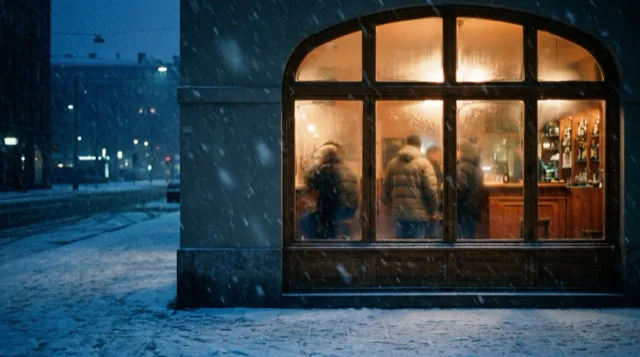
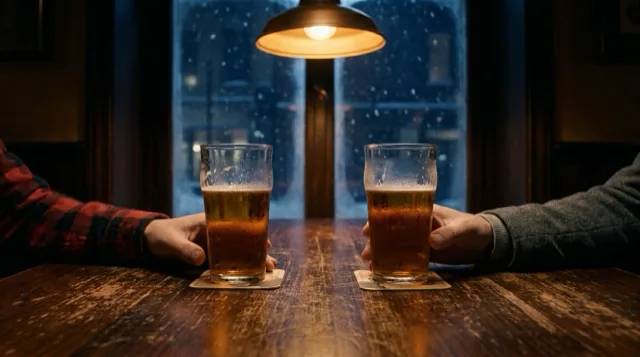
In 1997, at a meeting in Toronto, two engineers went out for beers: Jim Kardach from Intel, and Sven Mattisson from Ericsson.1
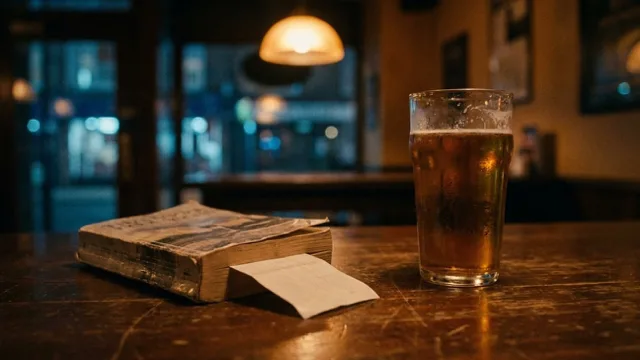
Mattisson had been reading The Long Ships, a Swedish novel about Vikings, and he told Kardach about a king.2
I want to start with that king, because his name is on the device in your pocket, and on the board on my bench.
The king was Danish, and he had been dead for about a thousand years.23
So before the radio, a short trip: across the Atlantic, to Denmark.13
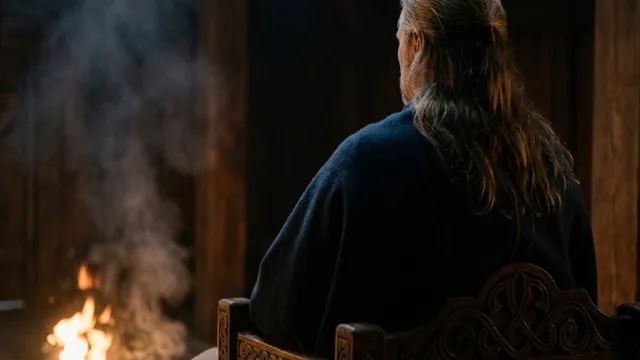
The king
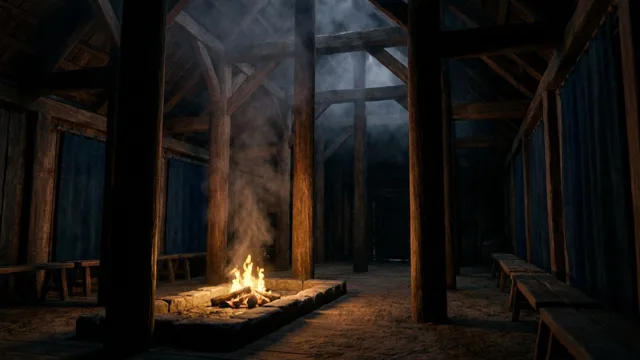
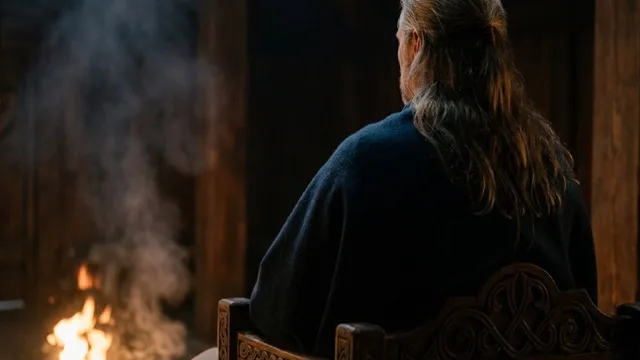
Harald Bluetooth ruled Denmark from about 958 until about 986.3
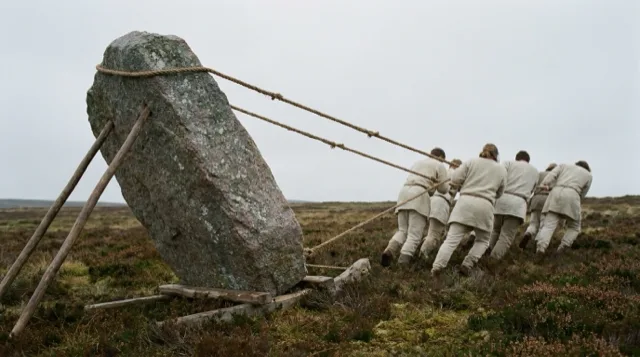
Around 965 he raised a great stone at Jelling for his parents. It says he won for himself all of Denmark and Norway, and made the Danes Christian.4
A king who brought together people who didn't speak to each other. Hold on to that. It's the whole film.
Denmark and Norway: two peoples, one king, and a stone to say so.4
Lund, before the name
The radio Mattisson worked on was older than that night in Toronto. The idea started at Ericsson's mobile division in Lund, Sweden, in 1989, with its technical chief, Nils Rydbeck, and Johan Ullman.5
The real design work began in 1994, when two engineers, Jaap Haartsen and Sven Mattisson, were asked for a short-range radio to replace the cable between a phone and a headset.6
One cable. That was the whole brief.
Replacing a cable sounds simple. But a cable never has to share the air.
Never sit still
Their answer was a radio that never sits still.
Classic Bluetooth splits the 2.4-gigahertz band into 79 channels, and hops between them up to 1,600 times a second.7
A noisy channel only costs it a moment. By then it's somewhere else.7
The placeholder
Kardach went home and read a history, Gwyn Jones's The Vikings, and found the king's runestone in it.2
He proposed the king's name as a code name, a placeholder.8
Then he made a slide: a figure carved on Harald's runestone, a phone in one hand and a laptop in the other. The pitch was that one radio could unite the computer and the phone.9
Later he found out the figure wasn't the king at all. It was Christ.9
The real name was going to be something sensible: RadioWire, or PAN. PAN won the vote, then failed the trademark search. So the placeholder shipped.10
A code name, borrowed from a Danish king, and it stuck.8103
The pitch outlived the slide: a phone in one hand, a laptop in the other, carved in stone.9
His initials
Even the logo is his. It's his initials: the runes for H and B, Hagall and Bjarkan, written as one mark.11
Five rivals, one radio
In May 1998, five companies (Ericsson, IBM, Intel, Nokia and Toshiba) formed the Bluetooth Special Interest Group.12
The first specification, version 1.0, followed in July 1999.13
Competitors, agreeing on one radio. A small unification of its own.
The first thing it did
And the first Bluetooth product was, fittingly, a headset. Ericsson unveiled it in Las Vegas in November 1999, and it shipped the following year.14
The first Bluetooth phone Ericsson showed never reached the shops. The T39 did, in 2001.15
The cable between the phone and the headset was gone. Exactly the brief.
The other king
So the radio had its king.
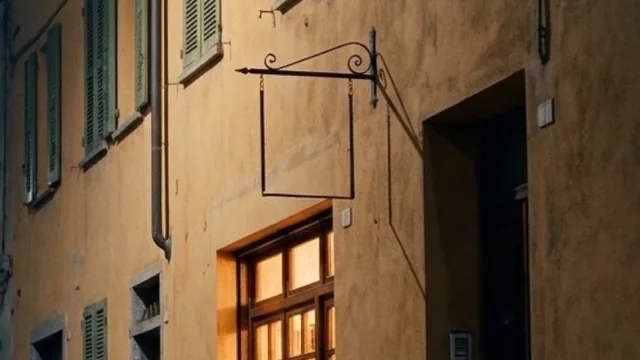
The other king in this story ruled Italy a thousand years ago, from 1002 to 1014. Before his name reached a circuit board, it went over a bar in a town called Ivrea.1617
Stories that are usually told wrong
Often told as: Kardach read The Long Ships.
Often told as: Bluetooth began at Ericsson Mobile in Lund in 1994.
Often told as: Kardach's slide showed King Harald on his runestone holding a phone and a laptop.
Often told as: The Jelling stone was originally painted, and paint traces survive on it; museum reconstructions follow those traces.
Common questions
How did Bluetooth get its name?
It is named after a tenth-century Danish king, Harald Bluetooth. In 1997, at a meeting in Toronto, Intel's Jim Kardach and Ericsson's Sven Mattisson went out for beers. Mattisson had been reading The Long Ships, a Swedish novel about Vikings, and told Kardach about a tenth-century Danish king. Kardach then read Gwyn Jones's history, The Vikings, and found the king's runestone in it. He proposed the king's name as a code name, a placeholder. The real name was going to be RadioWire or PAN. PAN won the vote, then failed the trademark search, so the placeholder shipped.12810
Who was Harald Bluetooth?
Harald Bluetooth ruled Denmark from about 958 until about 986. Around 965 he raised a great stone at Jelling for his parents. It says he 'won for himself all of Denmark and Norway and made the Danes Christian.'34
What does the Bluetooth logo mean?
The logo is his initials: the runes for H and B, Hagall and Bjarkan, written as one mark.11
Who invented Bluetooth?
The idea started at Ericsson's mobile division in Lund, Sweden, in 1989, with its technical chief, Nils Rydbeck, and Johan Ullman. The design work began in 1994, when two engineers, Jaap Haartsen and Sven Mattisson, were asked for a short-range radio to replace the cable between a phone and a headset.56
What was Bluetooth almost called?
The real name was going to be RadioWire or PAN. PAN won the vote, then failed the trademark search, so the placeholder shipped.10
The facts and their sources
Primary sources come first: the organisation, person or document itself. Secondary sources are reputable press or reference works.
- 1
In 1997, at a meeting in Toronto, Intel's Jim Kardach and Ericsson's Sven Mattisson went out for beers.
- primaryJim Kardach — Naming Bluetooth
- primaryEE Times (Kardach, 2008)
- 2
Mattisson had been reading The Long Ships, a Swedish novel about Vikings, and told Kardach about a tenth-century Danish king. Kardach then read Gwyn Jones's history, The Vikings, and found the king's runestone in it.
Often told as: Kardach read The Long Ships.
Why that is not right: The novel was Mattisson's, not Kardach's.- primaryJim Kardach — Naming Bluetooth
- primaryEE Times (Kardach, 2008)
- 3
Harald Bluetooth ruled Denmark from about 958 until about 986.
- secondaryBritannica — Harald I
- 4
Around 965 he raised a great stone at Jelling for his parents. It says he 'won for himself all of Denmark and Norway and made the Danes Christian.'
- 5
The idea started at Ericsson's mobile division in Lund, Sweden, in 1989, with its technical chief, Nils Rydbeck, and Johan Ullman.
Often told as: Bluetooth began at Ericsson Mobile in Lund in 1994.
Why that is not right: 1989 is the start of the idea; 1994 is when the design work began. - 6
The design work began in 1994, when two engineers, Jaap Haartsen and Sven Mattisson, were asked for a short-range radio to replace the cable between a phone and a headset.
- 7
Classic Bluetooth splits the 2.4-gigahertz band into 79 channels and hops between them up to 1,600 times a second.
- 8
He proposed the king's name as a code name, a placeholder.
- 9
Kardach made a slide: a figure carved on Harald's runestone, holding a phone in one hand and a laptop in the other. The pitch was that one radio could unite the computer and the phone. Later he found out the figure wasn't the king at all. It was Christ.
Often told as: Kardach's slide showed King Harald on his runestone holding a phone and a laptop.
Why that is not right: Kardach's own account says the figure (side C of the large Jelling stone, marks on the palms) is Christ, and he quietly stopped using the image.- primaryJim Kardach — Naming Bluetooth
- primaryEE Times (Kardach, 2008)
- 10
The real name was going to be RadioWire or PAN. PAN won the vote, then failed the trademark search, so the placeholder shipped.
- 11
The logo is his initials: the runes for H and B, Hagall and Bjarkan, written as one mark.
- 12
In May 1998, five companies (Ericsson, IBM, Intel, Nokia and Toshiba) formed the Bluetooth Special Interest Group.
- 13
The first specification, version 1.0, followed in July 1999.
- 14
The first Bluetooth product was, fittingly, a headset. Ericsson unveiled it in Las Vegas in November 1999, and it shipped the following year.
- 15
The first Bluetooth phone Ericsson showed never reached the shops. The T39 did, in 2001.
- 16
The bar was named after Arduin, a local lord who was King of Italy from 1002 to 1014.
- secondaryBritannica — Arduin of Ivrea
- 17
They named it after the bar where they drank, the Bar di Re Arduino.
- secondaryIEEE Spectrum — Banzi on the bar
- 18
Around 990 a lord named Arduin took over the march of Ivrea. He fought the Church for land, and in 997 his men killed the bishop of Vercelli. Two years later, in Rome, in front of the emperor and the pope, Arduin admitted he had led them.
- 19
In 2011, digging beside the stone, archaeologists found its original footing. After more than a thousand years, it still stands exactly where Harald put it. Today it stands behind glass.
- 20
It was almost certainly painted once. No colour survives on it now, so the painted copies you see are the museum's best reconstruction of how it looked.
Often told as: The Jelling stone was originally painted, and paint traces survive on it; museum reconstructions follow those traces.
Why that is not right: The National Museum says both 'the large rune stone was surely painted in strong colours' (Hvass 2011) and 'we don't know if Harald's rune stone was originally painted' (teaching page). Its 2020 news: 'time has gnawed all the colour off ... today only the pattern remains on the original.' Reconstructions draw on other finds: painted wood from the North Mound burial chamber, red-orange paint on the Bjerring rune stone, the Hørning plank. The 'fragments of paint in the engravings' claim (blogs) has no museum source.
The images
Real photographs and documents used in this part, with their credits and licences. Tap one to see the original.


.jpg)


Dramatised scenes
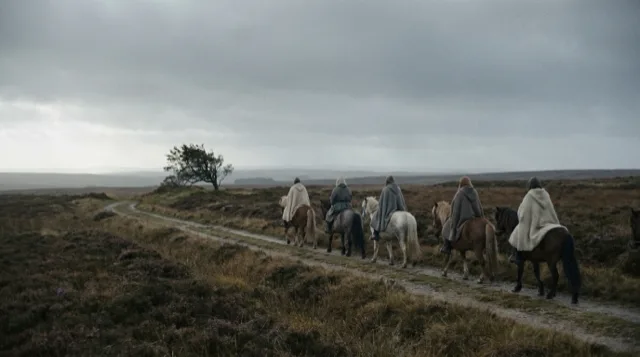
Places, people and eras for which no footage exists, reconstructed for the film. They are marked DRAMATISATION on screen.
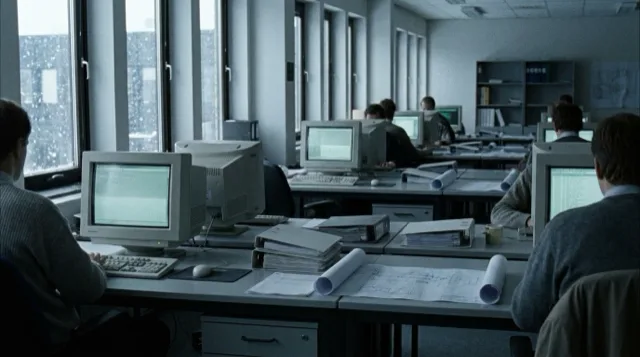
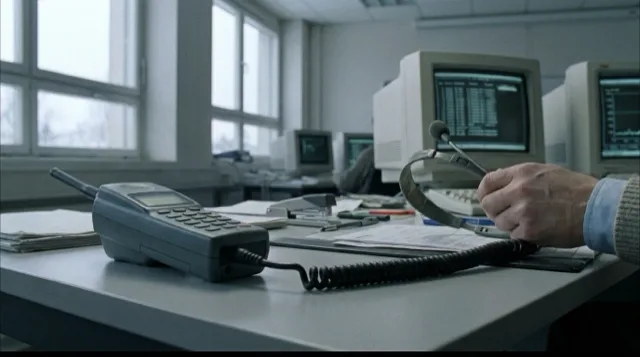


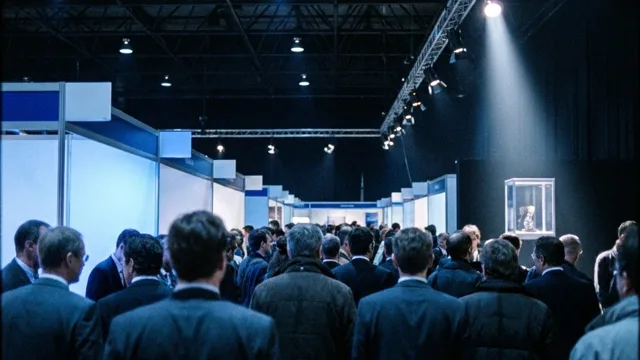
 40:00
40:00Two Kings: a history of Arduino and Bluetooth
This part starts at 2:00. The full film is 40:00 long: two kings, a radio, a board, and how they ended up on the same bench.
Link added at releaseAll sources
- primaryBluetooth SIG — 20 years of blue
- primaryBluetooth SIG — origin of the name
- primaryBluetooth SIG — tech overview
- primaryEE Times (Kardach, 2008)
- primaryEricsson press release — first Bluetooth product
- primaryEricsson — the Bluetooth story
- primaryIntel press release, 26 July 1999
- primaryJim Kardach — Naming Bluetooth
- primaryNational Museum news, 12 Oct 2020 — 'Danmarks dåbsattest er farverig' (Wayback)
- primaryNational Museum of Denmark — the Jelling stone
- primaryNational Museum — rune stones 'painted in bright colours'
- primaryNational Museum — the Viking colour palette (Wayback)
- primarySteen Hvass, Jelling-monumenterne (Danish Agency for Culture, Dec 2011)
- primaryUNESCO — Jelling Mounds, Runic Stones and Church
- secondaryBritannica — Arduin of Ivrea
- secondaryBritannica — Harald I
- secondaryDezeen, 15 Jul 2012
- secondaryIEEE Spectrum — Banzi on the bar
- secondaryNational Instruments — intro to Bluetooth test
- secondaryRCR Wireless, 22 Nov 1999
- secondaryTreccani, Dizionario Biografico degli Italiani — Arduino, re d'Italia (G. Arnaldi, 1962)
Two Kings: a history of Arduino and Bluetooth, by Troniction. The Bluetooth® word mark and logos are registered trademarks owned by Bluetooth SIG, Inc. Arduino® is a trademark of Arduino S.r.l. Neither endorses this film. Image credits and licences are listed with each image.