
Component
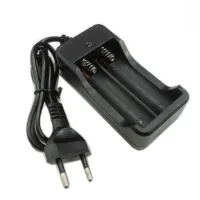
18650 Battery Charger
The car has no charging circuit in it. The cells come out of the holder and go into a charger, and that charger is what stops them at 4.2V before they become a problem.
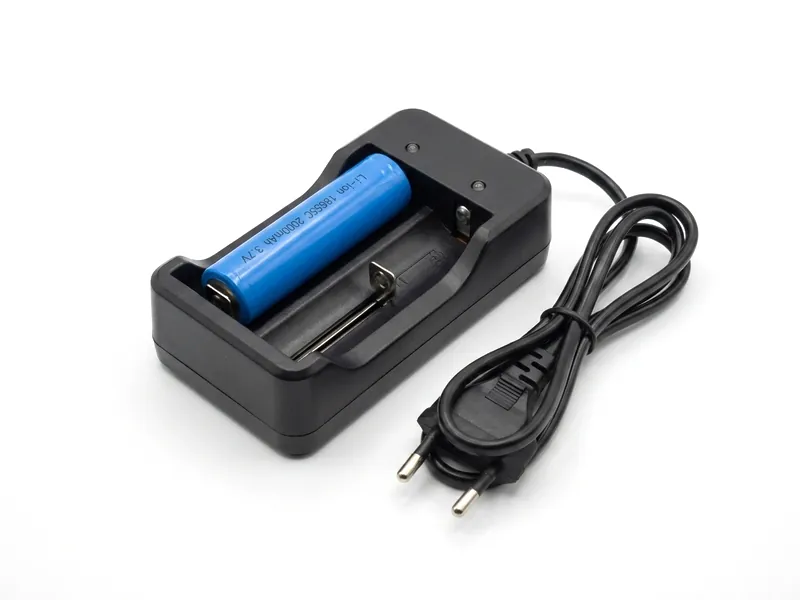
What a proper Li-ion charger does
It charges at a constant current until the cell reaches 4.2V, then holds 4.2V while the current tails off, then stops. That last part — stopping — is the whole reason you cannot use a generic supply. A lithium cell held above 4.2V does not simply refuse the extra charge; it degrades, then it vents.
A dual-bay charger has one of these circuits per slot, so the two cells charge independently and it does not matter that one is flatter than the other.
Reading the lights
- Red — charging.
- Green or blue — done. Colours vary between makes; the only thing that is consistent is that the colour changes.
- Light never changes, or flickers between the two — the cell is not making contact, or it is too flat to start, or it is dead.
How long it takes
Most of these chargers push about 500 mA per slot, so a flat 2000 mAh cell takes somewhere around four to five hours, and a 3000 mAh cell more like six. A charge that finishes in under an hour means the cell was not flat, or the charger is not really doing constant-current charging.
Check what the charger actually terminates at. The cheapest ones cut off late. When a charge finishes, take the cell out and put a multimeter across it: you want 4.15V to 4.20V. Anything at 4.3V or above means the charger is overcharging and should be replaced — that is the fault that turns a battery into a fire.
Charging habits worth having
- Charge on a hard, non-flammable surface. Not on the sofa, not on a bed, not on paper.
- Do not leave it charging overnight or while the house is empty.
- Unplug the charger when it is finished. Many of them keep trickling.
- Charge the pair together so they stay at a similar state of charge. Cells in series drain as a pair and behave best when they are matched.
- For long storage, leave the cells at about half charge rather than full or empty.
Every part of the car
 Arduino Uno R3: pins, power and limits
Brain
Arduino Uno R3: pins, power and limits
Brain
 L298N motor driver with Arduino: pinout, wiring and code
Motion
L298N motor driver with Arduino: pinout, wiring and code
Motion
 HC-06 Bluetooth module for Arduino
Control
HC-06 Bluetooth module for Arduino
Control
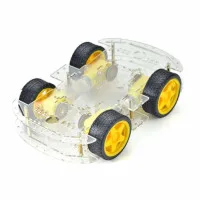 Chassis, Wheels and Gear Motors
Motion
Chassis, Wheels and Gear Motors
Motion
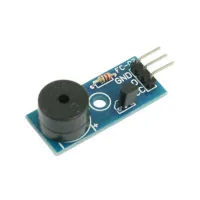 Buzzer
Sound
Buzzer
Sound
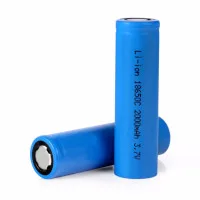 18650 Lithium-Ion Batteries
Power
18650 Lithium-Ion Batteries
Power
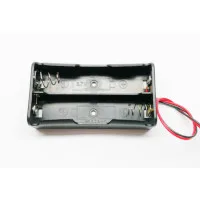 18650 Battery Holder
Power
18650 Battery Holder
Power
 18650 Battery Charger
You are here
18650 Battery Charger
You are here
 Jumper Wires and Circuit Wire
Wiring
Jumper Wires and Circuit Wire
Wiring
 Transparent Enclosure Box
Housing
Transparent Enclosure Box
Housing
Build it. Understand it.
Get the complete illustrated guide and start your first car — free.